राधाकृष्ण नेत्रालय आणि सुपरस्पेशालिटी आय हॉस्पिटल®
राधाकृष्ण नेत्रालय आणि सुपरस्पेशालिटी आय हॉस्पिटल®
राधाकृष्ण नेत्रालय आणि सुपरस्पेशालिटी आय हॉस्पिटल®
राधाकृष्ण नेत्रालय आणि सुपरस्पेशालिटी आय हॉस्पिटल®
राधाकृष्ण नेत्रालय आणि सुपरस्पेशालिटी आय हॉस्पिटल®
राधाकृष्ण नेत्रालय आणि सुपरस्पेशालिटी आय हॉस्पिटल®
राधाकृष्ण नेत्रालय आणि सुपरस्पेशालिटी आय हॉस्पिटल®
राधाकृष्ण नेत्रालय आणि सुपरस्पेशालिटी आय हॉस्पिटल®
राधाकृष्ण नेत्रालय आणि सुपरस्पेशालिटी आय हॉस्पिटल®
राधाकृष्ण नेत्रालय आणि सुपरस्पेशालिटी आय हॉस्पिटल®
राधाकृष्ण नेत्रालय आणि सुपरस्पेशालिटी आय हॉस्पिटल®
राधाकृष्ण नेत्रालय आणि सुपरस्पेशालिटी आय हॉस्पिटल®


Eye Specialist in Thane West: What Changes in Your Eyes After 40
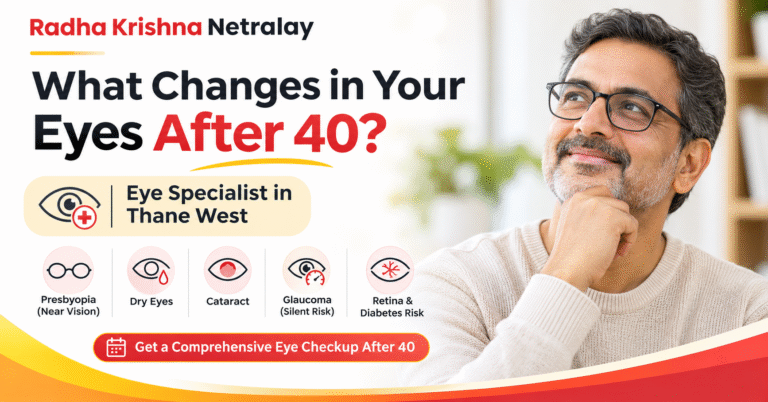
After 40, the most common eye change is presbyopia, the gradual loss of near focus that makes reading small print harder, and it is also the age when your risk of glaucoma, cataract, dry eye, and diabetic retina disease begins to rise. An eye specialist in Thane West can separate normal ageing changes from early disease through a comprehensive exam, which is why many doctors recommend a baseline check around 40 even if your vision feels fine.
Most people notice the first sign without realising what it is: holding the phone further away, squinting at menus in dim restaurants, or reaching for brighter light to read. These changes are usually harmless. But a few conditions that begin quietly in your forties cause no symptoms until damage is done. This guide explains what changes, what is normal, what is not, and how often to get checked, so you can protect your vision for the decades ahead.
Why Your Eyes Change After 40
The eye’s natural lens gradually stiffens and loses flexibility with age, while tear production, nerve sensitivity, and the drainage of fluid inside the eye also change, which is why many eye conditions become more common after 40. None of this happens overnight. It builds slowly, which is exactly why it is easy to dismiss.
You may also be dealing with factors that stack on top of ageing:
- Long hours on computers and phones
- Diabetes, high blood pressure, or high cholesterol
- Family history of glaucoma or other eye disease
- Smoking and UV exposure
- Long-term use of steroids or certain medicines
Understanding which changes are expected and which are warning signs is the difference between routine ageing and a missed diagnosis. If you are unsure whether a symptom is serious, these top signs you need an eye specialist in Thane West can help you decide.
Presbyopia: The Change Almost Everyone Notices
Presbyopia is the age-related loss of the eye’s ability to focus on near objects, and it typically begins in the early to mid-40s and continues to progress until around the mid-60s. It affects almost everyone, including people who have never needed glasses before.
According to the American Academy of Ophthalmology, presbyopia develops as the lens becomes less flexible, making close-up focusing harder. Common signs include:
- Holding books, phones, or menus at arm’s length
- Blurred vision at normal reading distance
- Eye strain or headaches after reading or screen work
- Needing more light to read comfortably
- Trouble switching focus between near and far
Reading Glasses and Other Options
Presbyopia is corrected, not cured. Your options include:
- Reading glasses for near tasks only
- Bifocal or progressive lenses that combine distance and near correction
- Multifocal contact lenses for people who prefer contacts
- Surgical approaches, such as certain lens implants or corneal procedures, for selected patients
Over-the-counter reading glasses can be a reasonable short-term fix, but they assume both eyes are the same and that nothing else is wrong. A proper eye exam checks that your two eyes are balanced and that your near vision problem is not hiding something else.
Dry Eyes After 40
Dry eye becomes more common with age because tear quality and quantity often decline. Hormonal changes, particularly after menopause, can contribute, as can long screen time, air conditioning, and certain medicines.
Symptoms include burning, grittiness, redness, a sensation of something in the eye, watering (which is often a reflex response to dryness), and blurry vision that clears when you blink. Chronic dry eye is a medical condition, not just an annoyance, because untreated dryness can damage the surface of the cornea and reduce comfort and visual quality.
Self-care helps in mild cases:
- Take screen breaks using the 20-20-20 approach: every 20 minutes, look at something 20 feet away for 20 seconds
- Blink fully and often during screen use
- Use preservative-free lubricating drops as advised
- Reduce direct airflow from fans and air conditioning
If symptoms persist, a specialist can identify the cause, such as meibomian gland dysfunction, and tailor treatment. For more detail, see this guide to dry eye treatment in Thane West and these tips on digital eye strain causes and prevention.
Cataract Risk Starts Rising
A cataract is clouding of the eye’s natural lens. It usually develops slowly and becomes more likely with age, though diabetes, smoking, prolonged UV exposure, past eye injury, and steroid use can bring it on earlier.
Early signs may include:
- Slightly blurred or hazy vision
- Glare or halos around lights, especially while driving at night
- Colours looking faded or yellowish
- Frequent changes in glasses prescription
- Needing more light to read
You do not need to rush into surgery when a cataract is first detected, because cataracts are generally operated on when they interfere with daily activities such as reading, driving, or work. Your doctor monitors the changes and advises on timing. When surgery is needed, it is a common and generally safe procedure that replaces the cloudy lens with an artificial one.
If you want to understand the cost side of surgery, see this page on cataract surgery in Thane West cost.
Glaucoma: The Silent Risk
Glaucoma is a group of conditions that damage the optic nerve, often linked to raised eye pressure. The most common type develops without pain or early symptoms, and peripheral vision is lost gradually, so people often notice only when significant damage has occurred.
Glaucoma risk increases after 40, and because early damage is painless and permanent, regular screening is the only reliable way to catch it before vision is lost. The National Eye Institute notes that glaucoma often has no early symptoms, which is why comprehensive dilated eye exams are important.
You are at higher risk if you have:
- A family history of glaucoma
- Diabetes or high blood pressure
- Significant nearsightedness or farsightedness
- Previous eye injury
- Long-term steroid use (drops, tablets, or inhalers)
- Thin corneas or other anatomical risk factors
A separate form called angle-closure glaucoma can cause sudden severe eye pain, headache, nausea, blurred vision, and halos around lights. That is an emergency requiring immediate care. For ongoing management and testing, see this resource on glaucoma treatment in Thane West.
Retina and Diabetes-Related Changes
Your retina also becomes more vulnerable with age and with conditions common in midlife. Diabetes, high blood pressure, and high cholesterol can damage retinal blood vessels without causing symptoms in the early stages.
Diabetic retinopathy can be present while vision still feels normal. People with diabetes need a dilated retinal exam at least once a year, and sooner if they notice changes. Age-related macular degeneration becomes more common later, typically from the 50s onward, and affects central vision needed for reading and recognising faces.
If you have diabetes, read more about diabetic eye treatment in Thane West and why annual screening matters even when your eyesight seems normal.
Floaters, Flashes and Other Visual Changes
As the vitreous gel inside the eye changes with age, many people notice floaters, small specks or cobweb-like shapes drifting across their vision. Most floaters are harmless.
A sudden increase in floaters, new flashes of light, or a shadow or curtain across your vision can indicate a retinal tear or detachment and needs same-day evaluation. Never wait and see with these symptoms.
You may also notice:
- Slower adjustment between light and dark
- Reduced night vision and increased glare
- Less contrast sensitivity, making low-light tasks harder
Many of these changes are normal. Still, new or sudden symptoms deserve assessment, because treatable conditions can look similar to normal ageing at first glance.
What Is Normal and What Is Not?
Change | Usually Normal Ageing | Needs Prompt Attention |
Near vision | Gradual difficulty reading small print | Sudden blurring in one eye |
Floaters | A few long-standing floaters | Sudden shower of floaters with flashes |
Dry eyes | Mild irritation, relieved by drops | Persistent pain, redness, or vision change |
Lights | Slightly more glare at night | Halos with severe eye pain and nausea |
Peripheral vision | No noticeable change | Patches of vision missing or tunnel vision |
Colour and contrast | Slightly reduced in dim light | Rapid fading or distortion of straight lines |
How Often Should You Get Your Eyes Checked After 40?
Many eye doctors recommend a baseline comprehensive eye exam around age 40, followed by checkups every one to two years, with annual exams if you have diabetes, a family history of eye disease, or other risk factors. Your specialist may adjust the schedule based on findings.
A thorough exam typically includes:
- Visual acuity and refraction
- Eye pressure measurement
- Slit-lamp examination of the front of the eye
- Dilated examination of the retina and optic nerve
- Additional tests, such as OCT or visual field testing, when indicated
For a deeper explanation of why routine visits matter, see the importance of regular eye exams.
Habits That Protect Your Eyes After 40
You cannot stop ageing, but you can reduce risks and preserve comfort:
- Control diabetes, blood pressure, and cholesterol, since they directly affect retinal health
- Wear sunglasses that block UV rays outdoors
- Avoid smoking, which raises the risk of cataract and macular degeneration
- Eat a balanced diet with plenty of leafy vegetables and fruits
- Take screen breaks and set up your workspace to reduce strain
- Do not self-medicate with steroid eye drops, since misuse can raise eye pressure and speed cataract formation
- Keep your glasses prescription updated to avoid unnecessary strain
Common Mistakes People Make After 40
- Assuming reading glasses solve everything. They treat focusing, not underlying disease.
- Waiting for symptoms before getting screened. Glaucoma and diabetic retinopathy often have none.
- Using over-the-counter drops for months. Persistent redness or irritation needs diagnosis.
- Delaying cataract evaluation until vision is very poor. Very advanced cataracts can be harder to treat.
- Ignoring family history. A parent or sibling with glaucoma changes your screening schedule.
Frequently Asked Questions
At what age does presbyopia start? Presbyopia usually begins in the early to mid-40s and continues to progress until roughly the mid-60s. It affects almost everyone, including people who previously had perfect vision.
Do I need an eye exam if my vision seems fine after 40? Yes. Glaucoma, diabetic retinopathy, and early macular disease often cause no symptoms at first. A comprehensive exam can detect them early, when treatment is most effective.
Are floaters dangerous? Most floaters are harmless and part of normal ageing. A sudden increase, especially with flashes of light or a shadow in your vision, needs same-day evaluation because it may signal a retinal tear.
Can reading glasses damage my eyes? No, reading glasses do not harm your eyes. But the wrong strength can cause strain, and relying on ready-made glasses may delay detection of other eye problems.
How often should someone over 40 get their eyes checked? Generally every one to two years, and yearly if you have diabetes, high blood pressure, a family history of glaucoma, or other risk factors. Your eye specialist will tailor the schedule to you.
Take the Next Step
Your forties are the ideal time to establish a baseline, because early detection makes most age-related eye conditions easier to manage. A comprehensive examination clarifies what is simply ageing and what needs treatment, and it gives you a record to compare against in future years.
To book a thorough checkup, explore the eye specialist in Thane West page, check directions and reviews on Google Maps, and schedule a senior and mid-life eye checkup.
Contacts
- KALYAN : 1st Floor, Sai Suman Tower, Tisgaon Naka, Near Jari Mari Gate, Kalyan East - 421306
- +91 8169829194
- radhakrishnanetralaydigital@gmail.com
- THANE :1st Floor, Shri Ganesh Building, Dr. Hajirnis, beside Axis Bank, off Lal Bahadur Shastri Marg, Kolbad, Uthalsar, Thane West, Thane, Maharashtra 400601
- +91 8169829194
- radhakrishnanetralaydigital@gmail.com
Radhakrishna Netralay © 2025 All Right Reserved
WhatsApp us